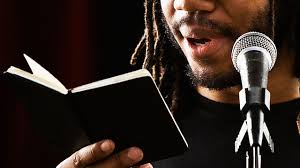
Spoken word poetry has taken an interest in today’s young poets and poetry lovers. Partly because it’s something that is fairly new to the world of poetry, but mostly because the audience has the true emotion from the author. There is no question about the attitude of the author about the subject of the poem, but the audience can also bring their personal experience into the interpretation of the poem. This allows the audience to create a personal relationship with the piece of poetry and they usually become very passionate about it.
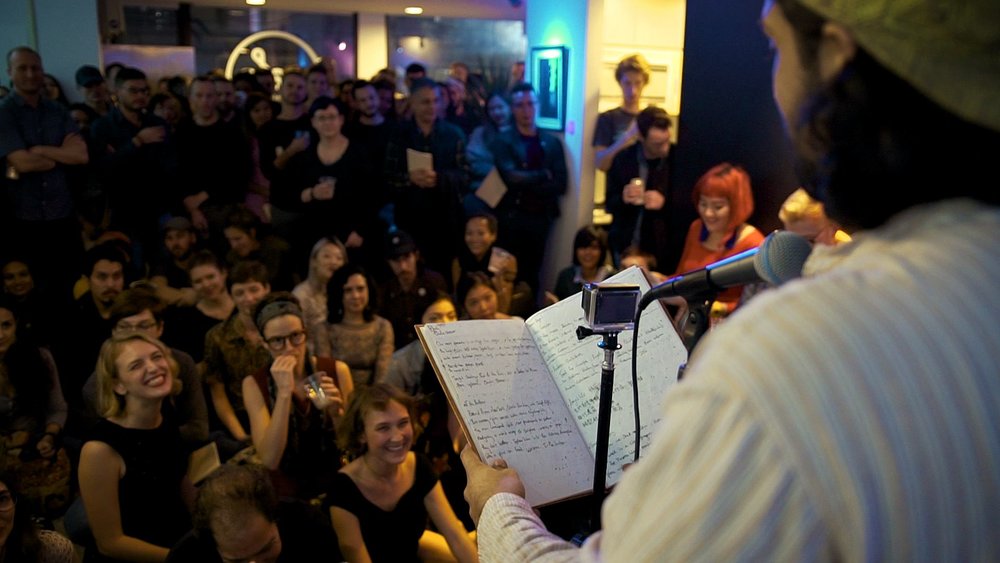
The experience of spoken word poetry can be extremely powerful. Since the audience is getting the true meaning and feelings from the author in real time and not on a recording device, responses usually are very overwhelming. The audience can realize that they have gone through the same situations or have felt the same feelings. It allows for the audience to understand that they are not alone.
Why should people experience spoken word poetry?
Spoken word poetry is mostly about social issues, strong emotions, and how to cope with traumatic events or problems in life. This process of going to an event with spoken word poetry and listening to issues in the world or your own experiences can be therapeutic for some. The audience has reassurance that others have gone through experiences that they have or are going through.
Spoken word can range from issues of women in a male dominated society and the lost of childhood innocence. The physical look of the poets also vary. Each and every person in the audience can relate to the poet or the poetry that is presented.
I highly encourage people to go to spoken poetry because it allows a person to feel a sense of unity through shared experiences. It helps with closure with traumatic experiences or overwhelming emotions. It can help a person feel like people truly care for their emotions.
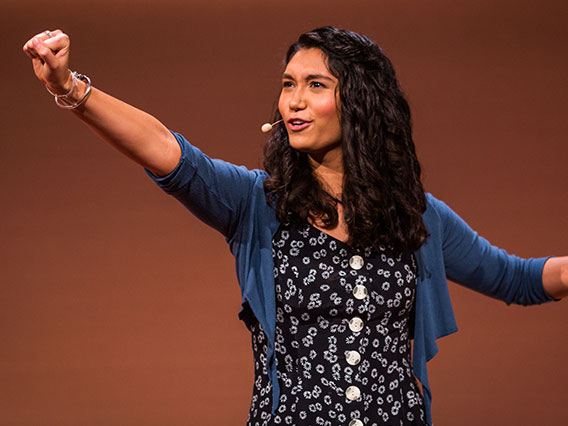
Sarah Kay is a thirty-year-old American poet who specializes in spoken word poetry. She also is the founder of Project V.O.I.C.E. Project V.O.I.C.E. is a group that is dedicated to using spoken word as a tool for education and inspiration. The first poem that I heard by her was: “The Type.” That poem was about empowerment of women. The poem was written for her best friend. She wanted to help her friend feel empowered.
Sarah Kay’s spoken word poem, “The Type,” has some examples of personification, such as when she uses the ocean as a subsitute for a person. There are also metaphors in this spoken word poem when she speaks about the things that women are not.
Today, poetry has taken on a dizzying number of new forms
and topics. From acrostic to found poems, haikus to free verse, and prose to
spoken word, there is no set form for contemporary poetry. And topics range from
philosophy to a piece of trash on the ground. The beauty of this is that poets have
so many different forms to explore with not rules to hold them back. There is
no shame in throwing out all tradition, abiding by all the tenets of a form, or
doing a little of both.
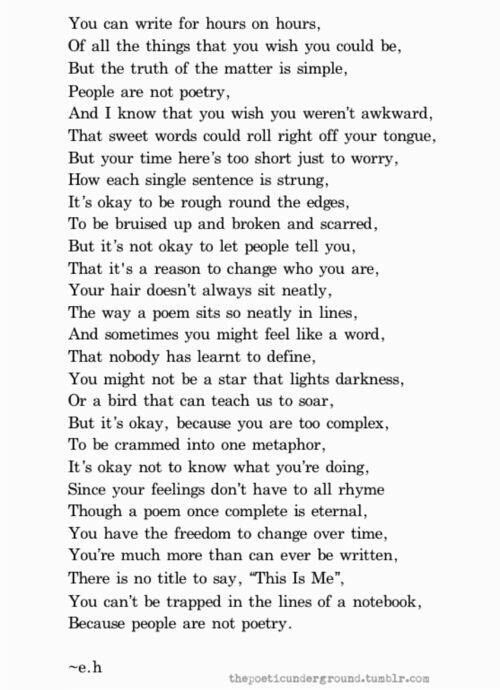
Popular on Pinterest and Tumblr for her unique poems
blending tradition with new styles is 21-year-old Australian “word reader, word
weaver & magic believer,” Erin Hanson.
Hanson’s writing is unique in that it is varied in content and
consistent in form. Almost every one of her poems includes a regular rhyme scheme
(usually every-other line). The rhyme scheme gives each poem a light bounce
that makes it seems almost like a nursery rhyme. For example, this excerpt is
from one of her poems:
Let me tell the tale
Of a girl who didn’t stop,
Who climbed up every mountain
Without a pause upon the top.
She’d dance until each blade of
grass
Was clothed in drops of dew,
And the sun knew her name
But the silver moon did too.
Hanson’s poems are easy for anybody to pick up and read
because she doesn’t use a lot of big, complicated words. This may be partly due
to the fact that she is a very young writer. Beginning writing around ages
11-13, Hanson seems like a child-prodigy. The poem cited above is dated 2015,
when she was just 19 years old. Today she is still considered young for the
amount of success she has achieved in writing and publishing her first poetry
book.
The success of her poetry is no surprise, though, because of
how much sincerity and talent is put into each piece. Hanson writes about a variety
of topics. From metaphors about life to laments about society, images of nature
to motivational anecdotes, there is a little bit of something for everyone in Hanson’s
poems. Some of my favorite are her poems about life. She has a deep understanding
of things, a wisdom almost unnatural for her young age, that draws me in.
In an interview, Hanson tells that her motivation for
writing is simply “I figure it’s just natural after reading stories that you
would want to try and create your own.” She followed this with, “it was
something I enjoyed doing, so I just kept at it.” Hanson was not and is not concerned
with writing for a particular audience, saying “My only hope is that I keep
writing in the future, even if it ends up being only for myself like it used to
be.”
Erin Hanson is an
exceptional writer that has taken advantage of the freedom that is allowed in contemporary
literature. Whether you are looking for a quick, lighthearted poem or an
insightful verse, you will find more than enough options in Hanson’s work.
\I first came across Andrea Gibson on Spotify – I was listening to some new music and found a poem of theirs called Your Life. It was a spoken word poem on their struggle with coming to terms with not only their sexuality, but their gender identity as well.
They have written poetry that’s published in the traditional form (i.e books) but they’re also well known for their spoken word as well. Andrea often collaborates with other queer or minority artists to create the music that plays under their poems.
Even though they’re a traditionally a spoken work poet, Andrea also is a part of the instagram poet movement, to an extent. While they promote tours and other upcoming events, their instagram feed is also riddled with short poetry they’ve published to the masses with internet access. This allows for those without access to their books to read the poems that could be just the thing they need to hear.
SOME EXAMPLES OF THEIR WORK
(Image taken from Pinterest.com)
This first poem is one of the first that I read by Gibson. It’s easy to read and even more, it’s relatable! Everyone has that person in their lives who they would do absolutely anything for, especially loving them even when they don’t love themselves. This particular work was written and published in one of their books, but it’s often been taken and produced on images.
(Screenshot from Andrea Gibson’s Instagram)
This is one of their instagram poems. It’s short and simple (as instagram poetry often is) but it resonates deeply. How often do we, as people, find our hearts fluttering when we’re around a specific person, even though we thought that feeling had passed?
Gibson’s work is just so wonderful to anyone who reads it. It’s not just about sexual/gender identity, but it’s about love and hope and the moments that we as humans go through on a daily basis. I highly recommend their work to anyone who’s willing to read. All it takes is a quick look at their instagram page and you’ll be drawn in the same way I was.
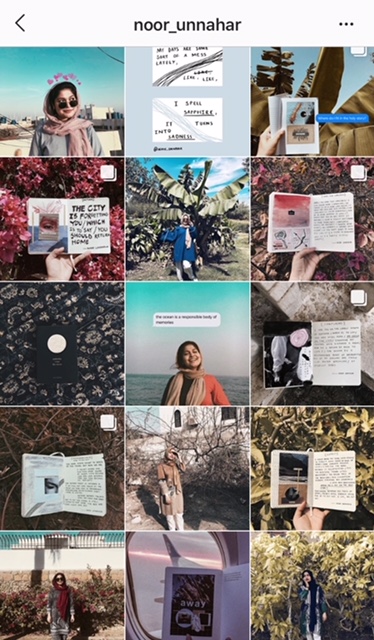
Noor Unnahar is a 21 year old poet, artist and photographer from Karachi, Pakistan. She gained internet attention by blogging and then later posting her art and poetry on Instagram. She also has one poetry collection published through Penguin Random House, it’s called “yesterday i was the moon” and it features art done by her. Noor recently published a guided poetry journal titled “find your voice”. Noor mainly uses Instagram to show her work, which features beautiful photos of her art and poetry journals. She also has a YouTube that features videos with art journal tutorials.
Screenshot of Noor’s Instagram page
Instagram poets often are considered not to be real poets or are said to write and just make stuff look pretty, although that could be true in some cases, with Noor it’s different.
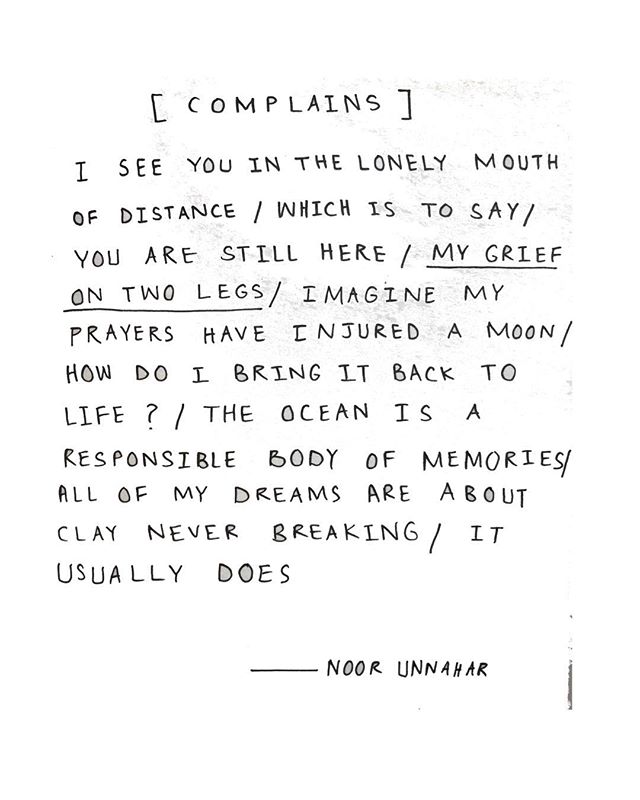
Her poetry explores self-love, nostalgia and identity. And you may not always understand what a poem of hers is saying until several reads. Sometimes it takes a very long time until I get it. But Noor has the ability to immerse you in her words, her imagery is incredible. Her work often uses fragmented thoughts with tons of metaphors and her metaphors are extremely unique. There’s also lots of personification as well. A lot of her work is very personal and dives into her memories.
Complains by Noor Unnahar ( from her Instagram)
Noor’s poetry has an ambiguity to it which I think helps give multiple meanings to what she’s saying.
Fragments of memory by Noor Unnahar (from her Instagram)
Noor Unnahar’s poetry always leaves me breathless and I hope you can feel that too.
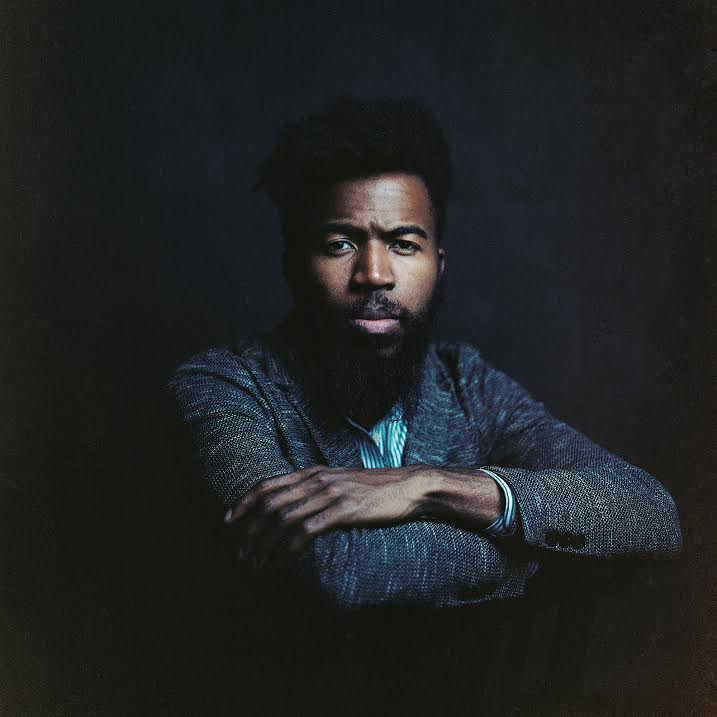
I want to introduce you to Dr. Joshua Bennett, a poet, writer, and author who uses the platform of poetry to bring attention to social issues within the black community. Dr. Bennett is best known for his book The Sobbing School (Penguin, 2016), a book of poetry that takes the readers on a journey throughout some of his most fond child memories, and sheds light on how tough it is for little black boys in this world.
Image by Rog Walker
Dr. Joshua Bennett received his Ph.D. in English from Princeton University and since then has received numerous honors for his writings, from being a part of the Visiting Writers Series at Lenoir-Rhyne University to being a finalist for the NAACP Image Award for poetry.
“Social Injustice: A situation when some unfair practices are being carried in the society. Whatever unjust is happening is usually against the law and it might not be something that is considered a moral practice. Basically, social injustice occurs when the equals are treated in an unequal way and the unequals are treated in an equal way.”
Umar Farooq, Study Lecture Notes
As previously stated, Dr. Bennett focuses a lot of his writing on the struggles of being Black in America. My favorite social injustice-driven poem by Dr. Bennett comes from his book The Sobbing School, called “On Extinction.” In this poem we see Dr. Bennett portray to us how it was growing up as a minority with a mother who is worried about sending her black son out into this scary world, “The woman across the table from me is scared / to raise her son, fears he will be killed / by police, says this outright, over soup, / expecting nothing.” He writes this poem with the fear of his past self in mind, a poem that makes sure to include that not only will diseases and old age kill black men, but that another cause for unnecessary deaths in the black community comes from police officers. The greatest impact of this poem comes from his use of caesuras (commas, colons, semi-colons) in crucial lines, which to me, add up to several moments of thought from a young child who is trying to realize the danger that comes with being a minority in this world. Dr. Bennett also provides us with such details that we can see the image of him and his mother sitting at a table and discussing this scary topic. Dr. Bennett also gives us a stream of consciousness moment where he is trying to absorb everything that is being thrown at him from his mother, “My first thought is of the landscape. / For a moment, all I can see is flat green oblivion / unchecked flora where fourth graders / once sped across the open.”
I also recommend you read the poem “X” by Dr. Bennett, a poem that personifies the letter “X” and causes us, as readers, to recognize the depth within, “I love how you stand / In exultation, arms raised / to welcome the rain.” The imagery seen from the beginning of “X” will make you want to continue reading the whole poem, eager to see what is in the next line. Dr. Bennett also highlights social injustice by including a few lines about human rights activist, Malcolm X, “As you are both Malcolm’s / shadow & the black unknown / he died defending.” Below are a few lines from “X.”
“X”
“As you are both Malcolm’s shadow & the black unknown he died defending, I praise
your untold potential, the possible worlds you hold within your body’s bladed frame. I love how you stand
in exultation, arms raised to welcome the rain, the bolt, whatever drops from the sky’s slick shelf
without warning, as all plagues do. ” -Dr. Joshua Bennett
Not only is Dr. Bennett a great poet, writer, and author, but he also does a magnificent job doing spoken word. One of my favorites is his performance “SAY IT, SING IT IF THE SPIRIT LEADS” a lyrical masterpiece where Dr. Bennett showcases self love for those listening, but more importantly to those black children who have ever felt left out. You should listen to this spoken word because it will allow you to understand the power and background of Dr. Bennett. While listening, you shouldn’t only focus on the flow of the spoken words but also the message behind it, to not be afraid of speaking your mind because you are important too.
Works Cited:
Bennett, Joshua. The Sobbing School. Penguin Books,
2016.
“Joshua Bennett: ‘Say It, Sing It If
The Spirit Leads (After Vievee Francis)’.” YouTube, The Greene Space at
WNYC & WQXR, 15 Jan. 2016, youtu.be/R3vpEd4Ce7g.
Contemporary poetry is inspiring and fascinating in part because it’s written by all kinds of people. The posts here will introduce you to new voices–enjoy!




 Exploring Contemporary Poetry